Wednesday, July 31, 2013

Mischief

Didn't I just mention how fearless this little boy is?
 
Although slightly paranoid about him falling and hurting himself, mostly I'm just grateful that he's a normal little boy (most of whom are part monkey anyway!). 

Monday, July 29, 2013

Summer Vacation!

We embarked on our annual summer road trip this week.  It's 3200 miles roundtrip across 7 states and one foreign country and includes stops to visit both sets of grandparents.  We were a little worried about how LB would do in the car for so long, but he did great.  We sang a lot of songs and read a lot of books together.  He also spent a fair amount of time snoozing in his car seat or looking out the window and waving at the corn and the cows.   Here are some trip highlights...
 
Playing on the beach in Canada...   


 Fishing with his uncle...
 
Trying to convinces someone, anyone, in the ice cream shop to give him a gumball (no one did)...
 
Enjoying his first ketchup flavored potato chips (a Canadian favorite)... 
 
Devouring his first ear of corn on the cob (he ate nearly an entire ear all by himself)...

Squirting Mommy with water toys... 

 
Although it was a wonderful vacation, we are happy to be home sweet home again.  We enjoyed lovely weather and some really special time with our families where the kids made some great memories, but driving cross country with two kids under the age of three is still a pretty big production. 
 

Friday, July 12, 2013

Sixteen Months

A few fun stories about our favorite 16 month old big boy...
 
He loves to "help" in the kitchen.  We drag a kitchen chair over to the counter and he will gladly help make a mess with any recipe I am concocting.

Speaking of messes, he is likely one of the world's messiest eaters.  We got his Highlights Hello magazine a few weeks ago with a story that goes something like this..."When Teddy eats, he feeds the cat.  He drops spaghetti on the mat.  He squishes veggies.  He smears grape jelly.  Does any food get in his belly?"  This kind of sums up our eating experiences.  Well, that and the fact that he uses his hair as a napkin.  We regularly hold him over the sink to remove the banana treatment from his blond locks.

He loves ketchup!  I had the refrigerator open to pour him some juice, but instead, he removed the ketchup from the bottom shelf of the refrigerator door and climbed up into his seat (while carrying the ketchup...which was quite a production for a boy of his size I might add) and proceeded to give me this puppy dog look.  He really wanted to eat ketchup.  

He is still excellent at climbing onto and into things.  The picture of him in the diaper box was particularly amusing.
 
In other updates...
  • he has a few words now including juice, cheese, up, down, yes, dog, ball, along with Mama and Dada, of course.  We still can't pick out his word for his big brother, but he can point him out or chase him down whenever we ask him where his big brother is.
  • he wants to do everything his brother does and play with the same things his brother plays with.
  • he is at a phase where he wants to do everything and climb everything, but he has no fear of the consequences of falling.  Needless to say, we are nearly always within arms reach to keep him out of the danger that he creates for himself.  I'm always happy when this stage of child development passes.
  • we have cut a bunch of molars (I say "we" because after many nights up rocking him through teething discomfort, I feel as if I am also part of the process although he was the one doing all the hard work).  He is now sporting the full set of 1-year molars along with all 8 teeth in front.  Next up are eye teeth and the 2-year molars before he has his full set of baby teeth.
  • he is sleeping well, although he tends to still wake up to eat once a night at least 3-4 nights a week. When he does, we give him a 4 oz bottle of toddler formula and he is quickly back to sleep.  His sleeping does get disturbed with teething, though.  I think that's pretty normal, though. 

Friday, July 5, 2013

A Vacation for Mom and Dad

My wonderful husband and I are celebrating 5 years of marriage this summer.  As a gift to us, my husband's parents (a.k.a. the world's greatest in-laws!), offered to come watch the boys for us so that we could enjoy a long weekend in the mountains.  The plans for this weekend have been in the works for quite some time, 6 months or more.  I admit that the idea of leaving LB with anyone other than us was terrifying a year ago.  He was eating every four hours and waking up several times a night.  We were tracking his food intake in notebooks to make sure he made it to within 1/3 of his average food intake for the day.   He was doing great and all, but we were, like all new metabolic families, a bit jittery...me especially.
 
As months have passed, we've gotten more comfortable with the feeding requirements associated with MCADD and the many interrupted nights of sleep.  That said, we had still never left LB with a sitter (other than his daycare provider and she only watches him during the day) up to this point and we had certainly never let him out of our sight for a meal. 
 
My husband's parents came out to visit us a couple times in the month leading up to our weekend.  During that time, they paid attention to his eating schedule and asked questions about the things they should watch for.  They understood the importance of his bedtime snack and his need for adequate hydration and rest periods while out playing in the summer heat.  They assured us that everything would be ok and I became more comfortable with the thought of leaving him not only for a meal, but for three days worth of meals in their capable hands.
 
As the vacation approached, the only thing that I remained worried about was the nighttime feedings.  LB is still waking up 3-4 nights a week expecting a bottle, which we oblige him in and he quickly snuggles back to sleep.  I was worried about my in-laws having to get up in the night with him and having their sleep disturbed possibly several nights in a row.  I mentioned this to my mother-in-law and she said the sweetest thing to calm my fears.  She said that some of her favorite times with all three of her children were during the quiet hours of the night.  She recalled that when her youngest finally started to sleep through the night, she was sad that she would no longer have that special one-on-one time with her because as a mother of three young children, her days were quite full, especially managing the two older boys (my husband included!) and she didn't get much one-on-one time with her youngest.  Not only was my mother-in-law not bothered by the thought of night feedings, she was looking forward to them.  What a relief! 
 
On the morning of our departure for our trip, I was a bit nervous, but mostly I was excited for a getaway with my husband and an opportunity for the boys to spend some special bonding time with their grandparents. I knew the boys would be more than fine with their grandparents and that they would have a lot of fun.  We also knew that if anything catastrophic happened, we would only be a couple hours away and could easily be home lickety-split.  Thankfully, nothing happened...but, in fact a whole lot happened.  The boys went to the zoo, visited several different parks in the neighborhood, went hiking, swam in the pool, etc. 
 
 
And we had a lovely vacation, complete with 3 nights in a row without a night feeding (something neither of us has had in about 16 months).  Happy Anniversary!


Monday, July 1, 2013

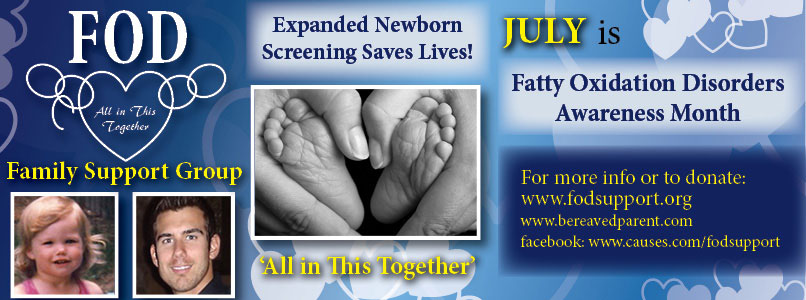
July is FOD Awareness Month!


Welcome to July, which is FOD Awareness Month!  Can you believe it's already July?  I know I can't!


Wednesday, June 26, 2013

Face to Face with the Group That Saved My Son's Life

While I was in Atlanta at the Joint Newborn Screening and Genetic Testing Symposium with the Consumer Task Force, I had the opportunity to meet many of the people who are involved with the newborn screening program in Colorado.  I already knew some of them from our interactions with the Inherited Metabolic Disease Clinic at Colorado Children's Hospital, but I was also introduced to some other influential folks from the public health side. 

Like always, the first thing I did was to thank them for the work that they do because my family is still grateful each and every day for the life-saving information we gained from LB's newborn screening.  The next thing I did was to ask how I can help them in their work.  Their answer was for me to join the State Newborn Screening Advisory Committee, which was in need of some parent representation.  Last night, I attended my very first meeting!

The Newborn Screening Advisory Committee exists to advise and make recommendations to the Colorado Department of Public Health and Environment's Laboratory Services Division and Prevention Services Division on issues in newborn screening.  It is comprised of experts from across the region in various medical, genetics, research, laboratory and public health disciplines.  From my understanding, there are similar groups in most states who help advise state-level policy on newborn screening.

The focus of last night's meeting was three-fold...

1) To discuss the state's implementation plan to begin screening for Pompe Disease, a lysosomal storage disorder recently recommended for inclusion in the national Recommended Uniform Screening Panel (RUSP) by the Secretary's Advisory Committee on Heritable Disorders in Newborns and Children.  I was surprised to learn that there are several laboratory methodologies that can be used to screen for this particular condition.  The committee wanted to be sure to use the methodology that would be most conducive to integrating other lysosomal storage disorders that are also expected to be included in the RUSP in the near future, particularly MPS I (aka Hurler Syndrome).  Since Pompe is a condition that has both an infantile-onset and a late-onset form, there was also a good deal of discussion on how to be sure that the individuals with infantile onset are caught before 1 month of age so that treatment can begin immediately and late-onset individuals are identified so that they can be monitored for symptoms that will signal when treatment should begin.  In both instances, there would be huge gains through early diagnosis via newborn screening, in particular with the late-onset group that is currently experiencing a 6-10 year diagnostic odyssey to even learn they have Pompe.

2) To update the committee on plans to implement Critical Congenital Heart Defect (CCHD) screening in Colorado.  There is national debate about whether pulse oximetry monitoring for CCHD should be a standard of care screening performed within the hospital or a state-mandated newborn screening.  Colorado is moving toward implementation of mandatory CCHD screening; however, they are concerned about how altitude can affect the cut-offs for what is considered a normal or abnormal screening.  There are several Colorado hospitals that are beginning pulse oximetry screening on their own as a standard of care in their newborn nurseries this summer and the hope is that soon all hospitals in the metro area will be doing it (and the metro area is where the majority of the births in the state occur).  With all the data from these hospitals in the coming months, the researchers and the advisory committee are confident that they will be able to make an informed decision about where cut-offs should be established and move forward with officially adding CCHD screening to the state's newborn screening panel.  Once it is included on the newborn screening panel, the Department of Public Health can begin a tracking and follow-up program to monitor this population and the CCHD screenings taking place statewide, which is important for Quality Assurance and Quality Control measures.

3) To discuss a recently published journal article on Congenital Adrenal Hyperplasia (CAH) that was authored by several committee members.  Colorado is one of only nine states that perform a mandatory second newborn screening.  The first screening typically takes place in the hospital, while the second one typically takes place during a baby's first visit to the pediatrician at approximately 1-2 weeks of age.  This study showed that nearly 30% of CAH cases were picked up on the SECOND newborn screening, meaning they were missed during the initial screening.  This is a particularly important finding for boys with CAH (the gender most often missed) because babies born with CAH need to be detected early and put on medication to prevent salt-wasting which can lead to dehydration and even death.

Although the meeting was quite technical, it was also very reassuring for me as a parent.  For Pompe, I was comforted to know that the committee is not rushing to implement screening in a manner that isn't mindful of additional screenings that could be added in the future.  They are sizing the program for maximum benefit to babies born today AND in the future, while also being mindful of the taxpayers and maximizing what they can do with their limited funds.  The fact that individuals with Pompe will soon have the benefit of early screening is also very exciting.  The current status quo of living for a decade with this condition, but not being able to get a diagnosis sounds incredibly frustrating.

For CCHD, I was pleased to hear that they are being careful to assign informed cut-offs so that they can minimize false-negatives and false-positives, both of which can be traumatic for families.  The cooperation and initiative taken by the hospitals is also a huge boost for CCHD screening here in the state.  Although many of these hospitals compete for a piece of the lucrative childbirth business (all the fancy birthing suites, TV commercials and various amenities for new moms), on this subject they will all be coming together to share pulse oximetry data and do what is best for ALL babies born in the state, not just the ones born at their hospital.  They know when to compete and when to cooperate. 

The meeting was a living, breathing ethics lessons with many competing priorities to be sorted through.  In the end, it was evident to me that everyone in the room was steadfastly committed to doing everything they can to ensure that the Colorado screening program continues to save lives and improve the lives of those with conditions detected by screening.   It was very much an honor for me to be part of it.   It was also very palpable in my heart that the people in that room each played a role in saving my son's life.  It meant the world to me that I could thank them, in person, for the work that they do.  They save babies lives every single day and I couldn't be more grateful that this group exists and that they do their jobs so passionately.

Monday, June 24, 2013

Spreading the Word!

I was recently interviewed by my graduate school about the work that I'm doing for newborn screening advocacy.  Although I earned a degree from a Public Policy school, my focus was always on environmental and energy policy.  I never took a single course on health policy.  However, after my son was born with a condition detected through a Public Health program, I found that policy is policy is policy.  It doesn't matter that my day job is in transportation and energy policy, those same skills translate very well to any field of policy.  The same may be true for you.  If you're thinking of becoming an advocate for newborn screening, I'd encourage you to just think about the things that you already do well and figure out how to do those same things to benefit the world of newborn screening.  We need you!

Visit the Ford School website for the original article or read below...

Kay Kelly works in transportation policy. So how did she become an advocate for this important public health program?
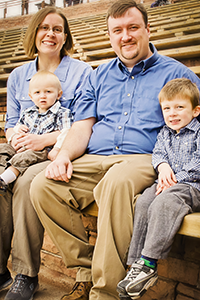
Kay Kelly and family
Wednesday, June 19, 2013
It was a scene that began like so many others: Kay (Milewski) Kelly (MPA '05) and her husband had just brought home their three-day-old son from the hospital. Waiting to welcome the newest member of the family, along with a homemade birthday cake, was Kay's oldest son and a house full of relatives. But as everyone sat down to dinner and a round of "Happy Birthday," the phone rang. It was the pediatrician: not fully seventy-two hours old and her newborn had tested "off the charts" for what Kay and her family now know is MCADD.

Newborn screening: What it is and why you may not have heard of it
Medium-chain Acyl-CoA dehydrogenase deficiency (MCADD) is a genetic metabolic disorder found in 1 out of 15,000 newborns. In babies with MCADD, a broken or missing enzyme renders the body unable to oxidize fatty acids—turn fat into energy—and can cause severe hypoglycemia if the body goes without food for long periods or isn't properly hydrated during illness.

"His body treats them [fatty acids] like toxins and gets rid of them, so he can't rely on stored fats for energy like we do," says Kay of her son, whom she describes as a healthy, happy 15-month-old. "He's going to be fine, and it's all because we found out. The first week of life can be very dangerous, illnesses can be very dangerous. And if we hadn't known better, we could have lost him. It's something that we're really thankful we know about."

Kay is talking about newborn screening, which tests every baby born in the United States for serious but treatable health disorders and conditions. While all states perform newborn screenings, the specific conditions screened vary from state to state. Most states screen for 29 of the 31 conditions on the Recommended Uniform Screening Panel, developed by the Secretary of Health and Human Services' Advisory Committee on Heritable Disorders in Newborns and Children (SACHDNC) in 2006. There are thirty-one disorders in the screening panel to date, says Kay, and every one of them is treatable if identified early. "All children who screen positive for a condition benefit from treatment and learning that they have the condition," she explains.

Screening tests exist for nearly sixty conditions, but less than a decade ago, some states tested for as few as four. "I think [newborn screening] is one of the greatest public health advancements of the century, but it's a largely unknown program," says Kay.

The screening process is simple: between twenty-four and forty-eight hours after an infant is born, a hospital technician pricks the heel of the newborn and blots the emerging drops of blood with filter paper. The blood spots are then sent to a state laboratory for testing. If the results come back abnormal, or outside of the normal range, the parents are asked to follow-up with a healthcare professional or specialist.

Screening also includes a hearing test and, in some states, pulse oximetry for heart defects. The screenings, and knowledge about potential diagnoses, can be lifesaving. Yet newborn screening isn't on the radar of many parents. "Parents receive so much information during pregnancy that newborn screening often falls to the bottom of the list," says Kay. "Most prenatal classes don't even cover newborn screening and hospitals tend to just hand you a brochure while they're performing the screening. Like many other public health programs, people only learn about newborn screening if there's a problem."

On a mission
Kay and other dedicated parents and organizations are working to change that. Kay blogs regularly at MCADD for Moms external link, a resource she created for families who have children with the same metabolic disorder as her son. She also applied to become, and was appointed, a member of the 2013 Consumer Task Force on Newborn Screening, which is a program of Baby's First Test external link, a federally funded clearinghouse that provides extensive information and resources about newborn screening at the local, state, and national levels for parents and health care professionals.

Active and passionate about child health advocacy issues like newborn screening, the Consumer Task Force comprises parents from across the country. Most task force members have or had children with conditions either detected or that could have been detected through newborn screening. In May 2013, Consumer Task Force members participated in a panel at an international meeting to share the family experience of newborn screening with scientists, medical professionals, and policy makers. In addition to increasing their relationships in the newborn screening and health community during a one-year term, each member also develops and executes a project in her or his home community to raise awareness. Kay constantly educates herself and others about MCADD, newborn screening, and the issues that affect them. She is currently urging her state representatives to reauthorize the newly expired "Newborn Screening Saves Lives Act," which would expand state-level screening programs and keep testing safe.

Kay works as a project manager for the Clean Cities program at the U.S. Department of Energy, focused on transportation policy and the future of alternative fuels. She likes her work and it remains important to her.

But newborn screening advocacy—and educating parents, citizens, and decision makers—has become a full-on mission, and her skills negotiating time constraints, multiple stakeholders, and often complicated information translate seamlessly from one policy issue to the other. So does her desire to make a difference.

"The motivation to get involved comes—a lot—from the Ford School," Kay explains. "I can't just sit back and be thankful about this; I need to go tell everybody about it. I need to talk to the decision makers and express to them how grateful I am and do everything I can to see to it that the progress that's been made in newborn screening continues to help other families like mine."mcaddformoms.blogspot.com/ external link