A fellow Consumer Task Force on Newborn Screening Mom recently wrote an article for CoSozo about her family's experience raising three children with MCADD.
I would love for everyone to take the time to read her article. I really love everything she has to say! Thanks Kelly for sharing this with the world!
In case you missed that link, here it is again -- The Challenging World of FODs.

Showing posts with label guest blog. Show all posts
Showing posts with label guest blog. Show all posts
Sunday, June 1, 2014

Wednesday, April 16, 2014
Privacy Versus Poster Child
From the very beginning of our MCADD journey and my subsequent quest to increase awareness of newborn screening and metabolic conditions through this blog and elsewhere, I've been very careful to keep our son's name private. He didn't ask for this and he's too young to tell us that he wants to be an advocate for it. For all we know, he might want to live his life with a metabolic condition quietly and out of the spotlight, so who am I to make him a poster child without his permission.
A recent blog post from a fellow Consumer Task Force on Newborn Screening Mom renewed my commitment to privacy for our son. Amanda's son is older than our LB and her experience gives me a preview of what young adulthood may be like for our son if every detail of his medical odyssey is chronicled for everyone in his school or soccer team or scout troop to Google. Like Amanda, I hope to continue to share relevant general information about MCADD on this site, but my son will remain out of the spotlight until such time as he can make that choice on his own.
I encourage you to read Amanda's incredible post about her poster child growing up. She is a beautiful person who is deeply thoughtful and generous, not to mention an incredible writer.
A recent blog post from a fellow Consumer Task Force on Newborn Screening Mom renewed my commitment to privacy for our son. Amanda's son is older than our LB and her experience gives me a preview of what young adulthood may be like for our son if every detail of his medical odyssey is chronicled for everyone in his school or soccer team or scout troop to Google. Like Amanda, I hope to continue to share relevant general information about MCADD on this site, but my son will remain out of the spotlight until such time as he can make that choice on his own.
I encourage you to read Amanda's incredible post about her poster child growing up. She is a beautiful person who is deeply thoughtful and generous, not to mention an incredible writer.
Friday, August 30, 2013
A Reminder in Kindness
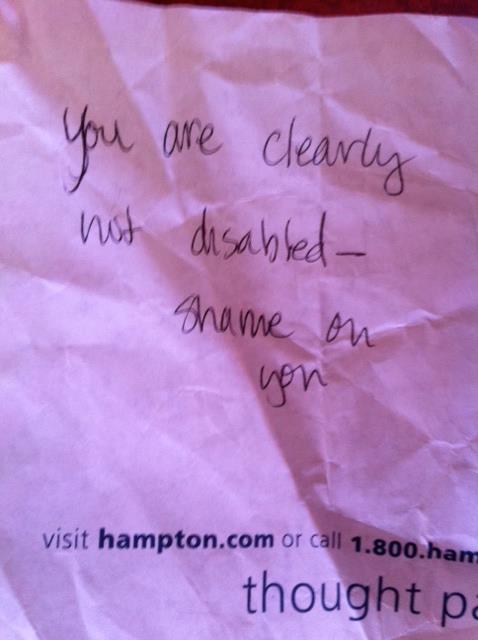
I found this blog both infuriating and touching at the same time. I am infuriated that this mother had to deal with such ignorance. Not all medical conditions are visible from the outside, but that doesn't make them any less real. It certainly doesn't make this mother's life any less challenging. I'm also touched by her response to the note of someone so ignorant:
I am a kinder woman who lives in a world that is no longer black and white. Sometimes gray is good, a salvation, a retreat from something that could be much worse. My priorities were reshuffled for me, and now I would never think to judge another.
I am always in motion and I am grateful. Grateful for the touch of my child who needs my hands to steady her, grateful for my child who craves my words to calm her, my child who needs my hugs to soothe her. I am even grateful, that I no longer live in your black-and-white world.
http://www.huffingtonpost.com/suzanne-perryman-/to-the-author-of-the-anonymous-note-left-on-my-car-window_b_3806012.html?utm_hp_ref=fb&src=sp&comm_ref=false
I urge everyone to be a human being, not a vigilante parking cop. You have no idea what other people go through until you walk a mile in their shoes. Being the parent of a child with a medical condition is challenging enough. Don't hurt their feelings on top of everything they already deal with.
Monday, June 24, 2013
Spreading the Word!
I was recently interviewed by my graduate school about the work that I'm doing for newborn screening advocacy. Although I earned a degree from a Public Policy school, my focus was always on environmental and energy policy. I never took a single course on health policy. However, after my son was born with a condition detected through a Public Health program, I found that policy is policy is policy. It doesn't matter that my day job is in transportation and energy policy, those same skills translate very well to any field of policy. The same may be true for you. If you're thinking of becoming an advocate for newborn screening, I'd encourage you to just think about the things that you already do well and figure out how to do those same things to benefit the world of newborn screening. We need you!
Visit the Ford School website for the original article or read below...
Newborn screening: What it is and why you may not have heard of it
Medium-chain Acyl-CoA dehydrogenase deficiency (MCADD) is a genetic metabolic disorder found in 1 out of 15,000 newborns. In babies with MCADD, a broken or missing enzyme renders the body unable to oxidize fatty acids—turn fat into energy—and can cause severe hypoglycemia if the body goes without food for long periods or isn't properly hydrated during illness.
"His body treats them [fatty acids] like toxins and gets rid of them, so he can't rely on stored fats for energy like we do," says Kay of her son, whom she describes as a healthy, happy 15-month-old. "He's going to be fine, and it's all because we found out. The first week of life can be very dangerous, illnesses can be very dangerous. And if we hadn't known better, we could have lost him. It's something that we're really thankful we know about."
Kay is talking about newborn screening, which tests every baby born in the United States for serious but treatable health disorders and conditions. While all states perform newborn screenings, the specific conditions screened vary from state to state. Most states screen for 29 of the 31 conditions on the Recommended Uniform Screening Panel, developed by the Secretary of Health and Human Services' Advisory Committee on Heritable Disorders in Newborns and Children (SACHDNC) in 2006. There are thirty-one disorders in the screening panel to date, says Kay, and every one of them is treatable if identified early. "All children who screen positive for a condition benefit from treatment and learning that they have the condition," she explains.
Screening tests exist for nearly sixty conditions, but less than a decade ago, some states tested for as few as four. "I think [newborn screening] is one of the greatest public health advancements of the century, but it's a largely unknown program," says Kay.
The screening process is simple: between twenty-four and forty-eight hours after an infant is born, a hospital technician pricks the heel of the newborn and blots the emerging drops of blood with filter paper. The blood spots are then sent to a state laboratory for testing. If the results come back abnormal, or outside of the normal range, the parents are asked to follow-up with a healthcare professional or specialist.
Screening also includes a hearing test and, in some states, pulse oximetry for heart defects. The screenings, and knowledge about potential diagnoses, can be lifesaving. Yet newborn screening isn't on the radar of many parents. "Parents receive so much information during pregnancy that newborn screening often falls to the bottom of the list," says Kay. "Most prenatal classes don't even cover newborn screening and hospitals tend to just hand you a brochure while they're performing the screening. Like many other public health programs, people only learn about newborn screening if there's a problem."
On a mission
Kay and other dedicated parents and organizations are working to change that. Kay blogs regularly at MCADD for Moms , a resource she created for families who have children with the same metabolic disorder as her son. She also applied to become, and was appointed, a member of the 2013 Consumer Task Force on Newborn Screening, which is a program of Baby's First Test , a federally funded clearinghouse that provides extensive information and resources about newborn screening at the local, state, and national levels for parents and health care professionals.
Active and passionate about child health advocacy issues like newborn screening, the Consumer Task Force comprises parents from across the country. Most task force members have or had children with conditions either detected or that could have been detected through newborn screening. In May 2013, Consumer Task Force members participated in a panel at an international meeting to share the family experience of newborn screening with scientists, medical professionals, and policy makers. In addition to increasing their relationships in the newborn screening and health community during a one-year term, each member also develops and executes a project in her or his home community to raise awareness. Kay constantly educates herself and others about MCADD, newborn screening, and the issues that affect them. She is currently urging her state representatives to reauthorize the newly expired "Newborn Screening Saves Lives Act," which would expand state-level screening programs and keep testing safe.
Kay works as a project manager for the Clean Cities program at the U.S. Department of Energy, focused on transportation policy and the future of alternative fuels. She likes her work and it remains important to her.
But newborn screening advocacy—and educating parents, citizens, and decision makers—has become a full-on mission, and her skills negotiating time constraints, multiple stakeholders, and often complicated information translate seamlessly from one policy issue to the other. So does her desire to make a difference.
"The motivation to get involved comes—a lot—from the Ford School," Kay explains. "I can't just sit back and be thankful about this; I need to go tell everybody about it. I need to talk to the decision makers and express to them how grateful I am and do everything I can to see to it that the progress that's been made in newborn screening continues to help other families like mine."mcaddformoms.blogspot.com/
Visit the Ford School website for the original article or read below...
Kay Kelly works in transportation policy. So how did she become an advocate for this important public health program?
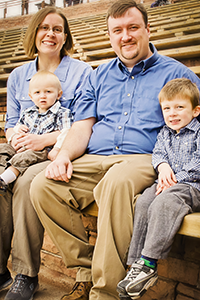 |
| Kay Kelly and family |
Wednesday, June 19, 2013
It was a scene that began like so many others: Kay (Milewski) Kelly (MPA '05) and her husband had just brought home their three-day-old son from the hospital. Waiting to welcome the newest member of the family, along with a homemade birthday cake, was Kay's oldest son and a house full of relatives. But as everyone sat down to dinner and a round of "Happy Birthday," the phone rang. It was the pediatrician: not fully seventy-two hours old and her newborn had tested "off the charts" for what Kay and her family now know is MCADD. Newborn screening: What it is and why you may not have heard of it
Medium-chain Acyl-CoA dehydrogenase deficiency (MCADD) is a genetic metabolic disorder found in 1 out of 15,000 newborns. In babies with MCADD, a broken or missing enzyme renders the body unable to oxidize fatty acids—turn fat into energy—and can cause severe hypoglycemia if the body goes without food for long periods or isn't properly hydrated during illness.
"His body treats them [fatty acids] like toxins and gets rid of them, so he can't rely on stored fats for energy like we do," says Kay of her son, whom she describes as a healthy, happy 15-month-old. "He's going to be fine, and it's all because we found out. The first week of life can be very dangerous, illnesses can be very dangerous. And if we hadn't known better, we could have lost him. It's something that we're really thankful we know about."
Kay is talking about newborn screening, which tests every baby born in the United States for serious but treatable health disorders and conditions. While all states perform newborn screenings, the specific conditions screened vary from state to state. Most states screen for 29 of the 31 conditions on the Recommended Uniform Screening Panel, developed by the Secretary of Health and Human Services' Advisory Committee on Heritable Disorders in Newborns and Children (SACHDNC) in 2006. There are thirty-one disorders in the screening panel to date, says Kay, and every one of them is treatable if identified early. "All children who screen positive for a condition benefit from treatment and learning that they have the condition," she explains.
Screening tests exist for nearly sixty conditions, but less than a decade ago, some states tested for as few as four. "I think [newborn screening] is one of the greatest public health advancements of the century, but it's a largely unknown program," says Kay.
The screening process is simple: between twenty-four and forty-eight hours after an infant is born, a hospital technician pricks the heel of the newborn and blots the emerging drops of blood with filter paper. The blood spots are then sent to a state laboratory for testing. If the results come back abnormal, or outside of the normal range, the parents are asked to follow-up with a healthcare professional or specialist.
Screening also includes a hearing test and, in some states, pulse oximetry for heart defects. The screenings, and knowledge about potential diagnoses, can be lifesaving. Yet newborn screening isn't on the radar of many parents. "Parents receive so much information during pregnancy that newborn screening often falls to the bottom of the list," says Kay. "Most prenatal classes don't even cover newborn screening and hospitals tend to just hand you a brochure while they're performing the screening. Like many other public health programs, people only learn about newborn screening if there's a problem."
On a mission
Kay and other dedicated parents and organizations are working to change that. Kay blogs regularly at MCADD for Moms
, a resource she created for families who have children with the same metabolic disorder as her son. She also applied to become, and was appointed, a member of the 2013 Consumer Task Force on Newborn Screening, which is a program of Baby's First Test , a federally funded clearinghouse that provides extensive information and resources about newborn screening at the local, state, and national levels for parents and health care professionals. Active and passionate about child health advocacy issues like newborn screening, the Consumer Task Force comprises parents from across the country. Most task force members have or had children with conditions either detected or that could have been detected through newborn screening. In May 2013, Consumer Task Force members participated in a panel at an international meeting to share the family experience of newborn screening with scientists, medical professionals, and policy makers. In addition to increasing their relationships in the newborn screening and health community during a one-year term, each member also develops and executes a project in her or his home community to raise awareness. Kay constantly educates herself and others about MCADD, newborn screening, and the issues that affect them. She is currently urging her state representatives to reauthorize the newly expired "Newborn Screening Saves Lives Act," which would expand state-level screening programs and keep testing safe.
Kay works as a project manager for the Clean Cities program at the U.S. Department of Energy, focused on transportation policy and the future of alternative fuels. She likes her work and it remains important to her.
But newborn screening advocacy—and educating parents, citizens, and decision makers—has become a full-on mission, and her skills negotiating time constraints, multiple stakeholders, and often complicated information translate seamlessly from one policy issue to the other. So does her desire to make a difference.
"The motivation to get involved comes—a lot—from the Ford School," Kay explains. "I can't just sit back and be thankful about this; I need to go tell everybody about it. I need to talk to the decision makers and express to them how grateful I am and do everything I can to see to it that the progress that's been made in newborn screening continues to help other families like mine."mcaddformoms.blogspot.com/
Saturday, June 22, 2013
From the APHL Blog...
This blog definitely touched my heart. A woman who works in newborn screening has a niece who screened positive for PKU (a metabolic disorder). She writes about her family's experience, their gratitude and how she will never view her job the same way again. Many of her sentiments are familiar to me and our family's experience with newborn screening.
Association of Public Health Laboratories Blog - Newborn Screening Gets Personal
Association of Public Health Laboratories Blog - Newborn Screening Gets Personal
Subscribe to:
Posts (Atom)